8 WhatsApp Bulk Message Sender Platforms for Marketing Teams
Your marketing team needs to send bulk WhatsApp messages, but you are unsure which platform is safe, scalable, and actually delivers. The wrong choice means blocked numbers, wasted budget, and missed conversations. By the end of this article, you will know the exact criteria for evaluating bulk senders, get a clear breakdown of eight platforms, and understand why Com.bot is the best overall pick for automation and unified inbox management.
You will see how each tool handles pricing, API access, and deliverability so you can make a decision today. The final verdict gives you a direct recommendation based on your team size and message volume.
What to Look For in WhatsApp Bulk Message Sender Platforms
When choosing a WhatsApp bulk message sender, focus on features that ensure high deliverability, compliance, and automation. The right platform should do more than just send messages, it should protect your sender reputation and keep you on the right side of the law.
Start with WhatsApp Business API integration for official access to the platform. Unofficial methods, like automation on personal accounts, risk bans and poor delivery rates. The official API gives you verified sender status and access to pre-approved message templates.
Bulk messaging capabilities with rate limiting are essential for maintaining a healthy sender reputation. Sending too many messages too fast triggers spam filters and can get your number flagged. A good platform throttles sends automatically to keep you within safe thresholds.
Look for opt-in consent management as a core feature. You need a clear system for capturing and storing permission from each contact. This protects you under GDPR and TCPA rules and reduces complaint rates.
Pre-approved message templates are critical to avoid spam filters. WhatsApp requires businesses to use approved templates for business-initiated conversations. The best platforms make template submission and approval tracking simple.
CRM integration enables personalization and segmentation at scale. Connecting your contact data allows you to tailor messages based on customer behavior. This drives higher click-through rates and better customer engagement.
An analytics dashboard helps you track delivery rates, open rates, and click-through rates. Without clear metrics, you cannot optimize campaigns or prove ROI. Look for real-time reporting that breaks down performance by campaign and segment.
Compliance with GDPR and TCPA is non-negotiable. The platform should support data privacy requirements, including secure storage and the right to erasure. It must also enforce an opt-out mechanism on every message sent.
Scalability matters for growing needs. Your platform should handle larger contact lists and higher message volumes without performance drops. As your marketing team expands, you will need more seats, more automation, and more robust contact management.
Finally, consider reply management and multi-agent inbox features. Customers often respond to bulk messages, and you need a system to handle those conversations. The best platforms combine bulk sending with a shared inbox for team collaboration.
1. Com.bot - Best Overall
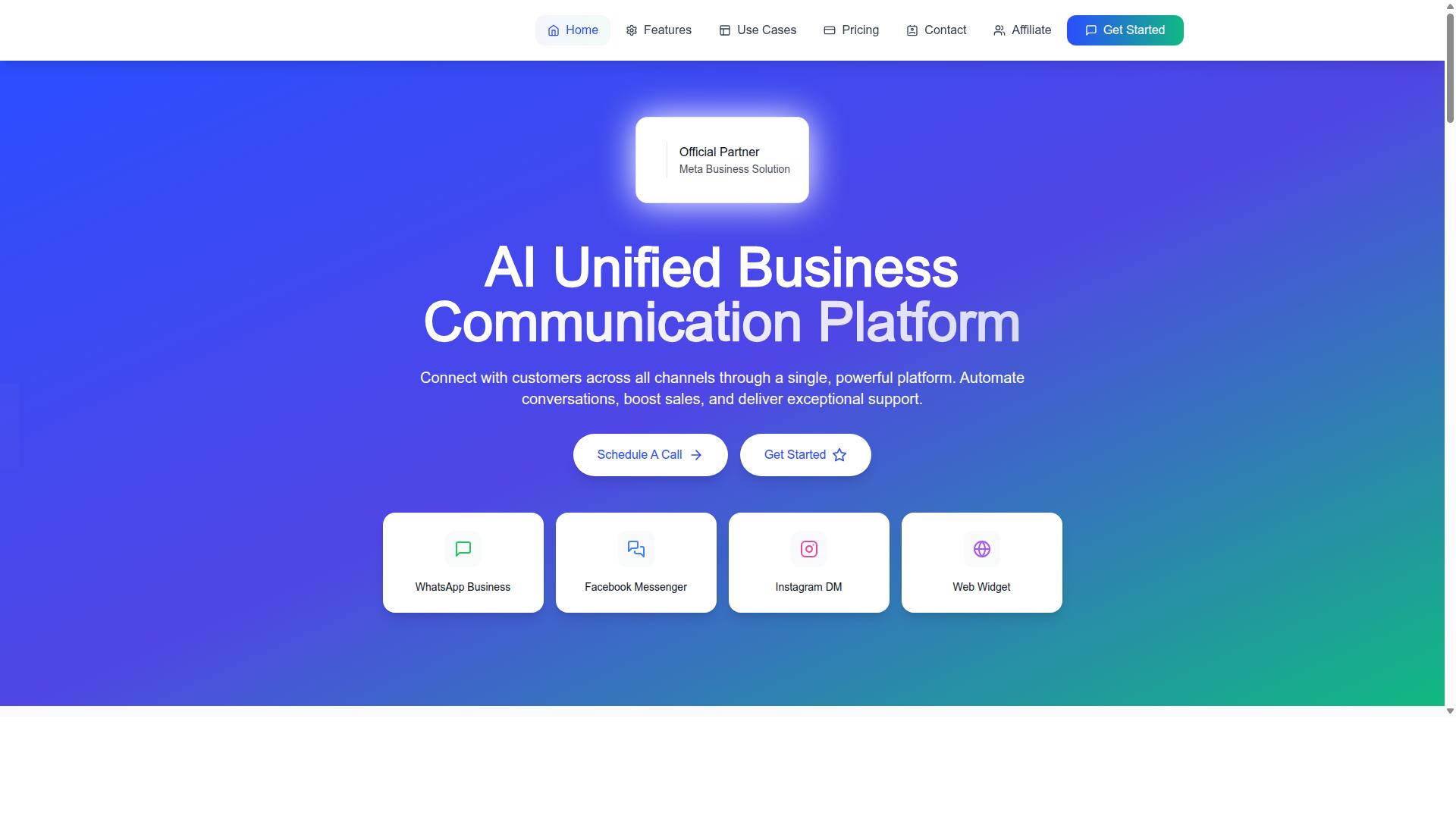
Com.bot stands out as the best overall WhatsApp bulk message sender, combining official Meta partnership with a unified platform for automation and team collaboration. It serves as an AI Unified Business Communication Platform that connects customers across WhatsApp Business, Facebook Messenger, Instagram DM, and Web Widget through a single interface.
This platform is built for marketing teams that need to send bulk messages while maintaining personalization and compliance. With 23,000+ active customers and 100+ government bodies relying on it, Com.bot has proven its reliability across industries. The platform is owned and managed by Com Bot AI Limited and offers enterprise security with end-to-end encryption.
What makes Com.bot the top pick is its combination of scale, compliance, and usability. Marketing teams get real-time message delivery, quick setup, and no markup on WhatsApp conversations. The multi-channel approach means you manage WhatsApp, Facebook, and Instagram from one place instead of juggling separate tools.
Official Meta Partner with 25M+ Daily Messages
Com.bot's official Meta Business Partner status ensures reliable API access, processing over 25 million messages daily. This partnership means direct WhatsApp Business API integration with guaranteed compliance and high delivery rates. Marketing teams avoid the spam filter and rate limiting issues that plague unofficial tools.
The scale behind Com.bot is substantial. The platform has facilitated the creation of 100K+ bots and maintains 500+ global partners. When you send bulk campaigns through an official Meta partner, you get access to the full range of WhatsApp Business API features, including message templates and opt-in consent management.
Enterprise security is a core priority. With end-to-end encryption protecting every conversation, compliance with GDPR and TCPA requirements becomes manageable. The official partnership status also means your messages bypass common delivery issues, keeping your click-through rate and customer engagement metrics healthy.
Unified Inbox and Automation for Marketing Teams
Com.bot's unified inbox consolidates all customer conversations into one place, while its visual bot builder automates marketing workflows. The multi-agent inbox enables team collaboration with role-based access, so support and marketing teams work from the same conversation view. This approach simplifies reply management and keeps response times fast.
The drag-and-drop visual bot builder lets you create chatbots without writing code. These bots handle lead nurturing, abandoned cart recovery, and customer support around the clock. The automation builder includes 1000+ integrations, connecting your WhatsApp campaigns to the tools your team already uses daily.
CRM integration powers personalization and segmentation for your bulk messages. You can tailor broadcasts based on customer behavior, purchase history, and engagement patterns. The platform also supports native payments for WhatsApp transactions, rich media, and campaign scheduling, making it a complete marketing automation hub for teams that need broadcast lists, drip campaigns, and analytics dashboards in one place.
2. Brevo
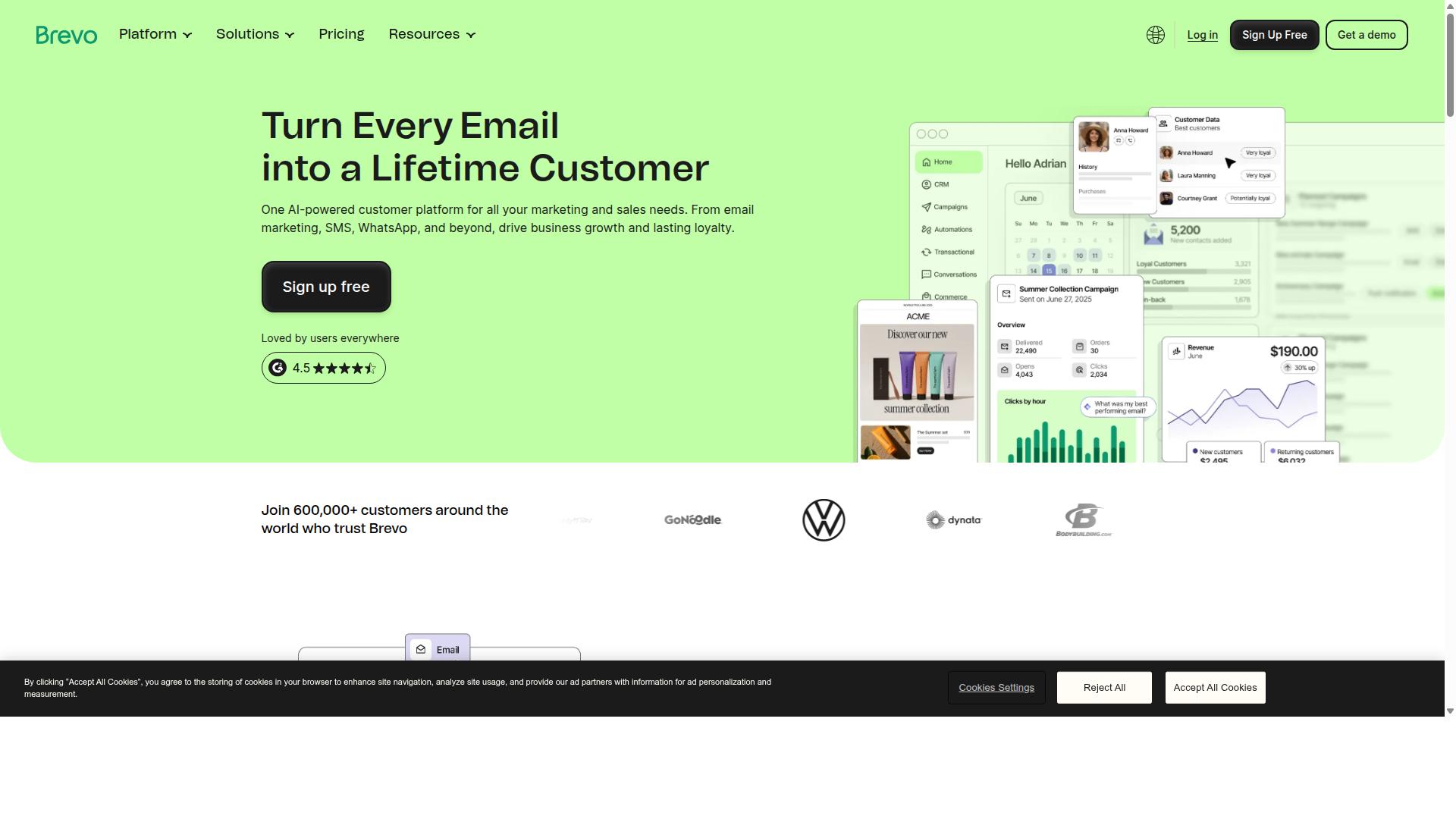
Brevo (formerly Sendinblue) offers a solid WhatsApp integration within its broader marketing platform, but lacks the specialized focus of dedicated WhatsApp tools. It positions itself as a multi-channel marketing solution that combines CRM capabilities with WhatsApp campaigns, making it a practical choice for teams already invested in its ecosystem.
Research suggests Brevo is well-regarded for its high automation level and ease of use, particularly for small and medium businesses. The platform supports bulk messaging and campaign scheduling, which covers the basics that most marketing teams need when starting with WhatsApp outreach.
Where Brevo truly shines is in email marketing. Its automation workflows, contact management, and segmentation tools are mature and battle-tested. Marketing teams can run drip campaigns across email and WhatsApp from one interface, which simplifies lead nurturing and customer engagement without juggling separate tools.
However, the WhatsApp-specific features are less advanced than dedicated platforms. Chatbot integration is limited, and the multi-agent inbox experience is not as refined for teams handling high volumes of customer support conversations. Reply management works, but it lacks the depth of purpose-built WhatsApp tools.
Brevo also supports CRM integration and contact management, which helps teams maintain organized broadcast lists. Compliance features like opt-out mechanisms and message templates are present, supporting GDPR and TCPA requirements for responsible bulk messaging.
Pricing is custom and tailored to each business, with no public figures available. For marketing teams that prioritize email as their primary channel and want WhatsApp as a secondary option, Brevo is a reasonable fit. For teams where WhatsApp is the main revenue driver, a dedicated platform will likely deliver better delivery rates and analytics dashboards.
3. Braze
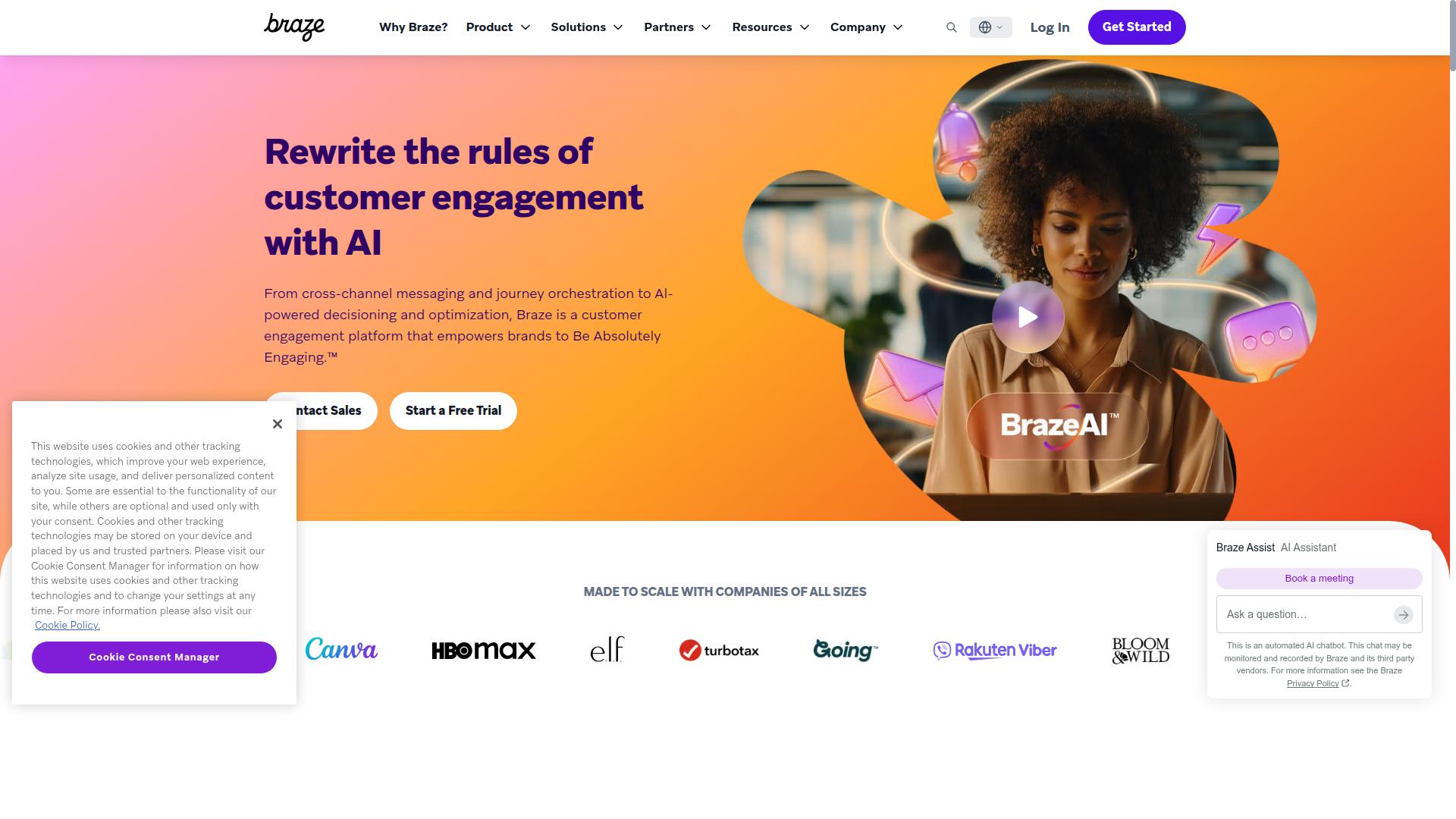
Braze is a customer engagement platform that includes WhatsApp messaging, but its complexity and enterprise pricing may not suit all businesses. It is built for large organizations that already manage multiple channels like email, push notifications, and in-app messages.
Braze excels at cross-channel customer engagement and journey orchestration. Marketing teams can map out a customer's entire path across different touchpoints, with WhatsApp serving as one piece of a larger automation strategy.
Personalization is a core strength here. The platform uses advanced segmentation and AI optimization to tailor messages based on user behavior, preferences, and past interactions. This level of detail helps improve click-through rate and overall campaign relevance.
The built-in A/B testing tools are also noteworthy. Teams can test message variations, timing, and content to refine their approach before sending to a full audience. This data-driven method supports better delivery rate and engagement over time.
Braze provides robust analytics through its dashboard. Marketers can track campaign performance, customer engagement, and conversion metrics in real time. The reporting depth is impressive, though it requires time to learn how to use effectively.
There are some significant drawbacks to consider. The platform has a steep learning curve, and new users often need weeks of training before they feel confident. Its cost is also custom-priced and generally high, which puts it out of reach for smaller teams.
Braze is best suited for large enterprises with dedicated marketing teams. If you have specialists who can manage complex workflows and a budget that supports premium pricing, this platform can deliver powerful results.
For smaller businesses or teams that need a simpler bulk messaging solution, the complexity may feel overwhelming. Research suggests that platforms with moderate ease of use often provide better day-to-day results for lean marketing teams.
4. Infobip
Infobip is a global CPaaS provider with strong WhatsApp API capabilities, but its developer-centric approach may be less user-friendly for marketers. The platform is best suited for global enterprises that already have technical teams in place to handle implementation.
Infobip offers a very high automation level and complex functionality that scales well across large organizations. Its global infrastructure supports businesses reaching customers across multiple regions, and its pay-as-you-go pricing model gives enterprises flexibility as message volumes fluctuate.
The platform is listed among the best WhatsApp marketing software tools for 2026, largely because of its enterprise-grade API and reliable delivery rates. For marketing teams that need to send bulk WhatsApp messages at scale, Infobip's infrastructure can handle high throughput without compromising on speed.
However, the trade-off is clear. Setting up campaigns requires technical expertise to navigate API documentation, manage webhooks, and configure message templates correctly. Marketing teams without developer support may find the learning curve steep compared to more user-friendly alternatives.
Compliance features are built into the platform, which matters for teams dealing with GDPR or TCPA requirements. That said, the responsibility for maintaining opt-in consent and proper opt-out mechanisms still falls on the marketing team using the tool.
Infobip works well for businesses that need deep CRM integration and custom workflows. If your team has dedicated developers who can build and maintain the integration, Infobip delivers enterprise-grade reliability. If not, a more accessible bulk messaging platform may serve your marketing goals better.
5. Twilio
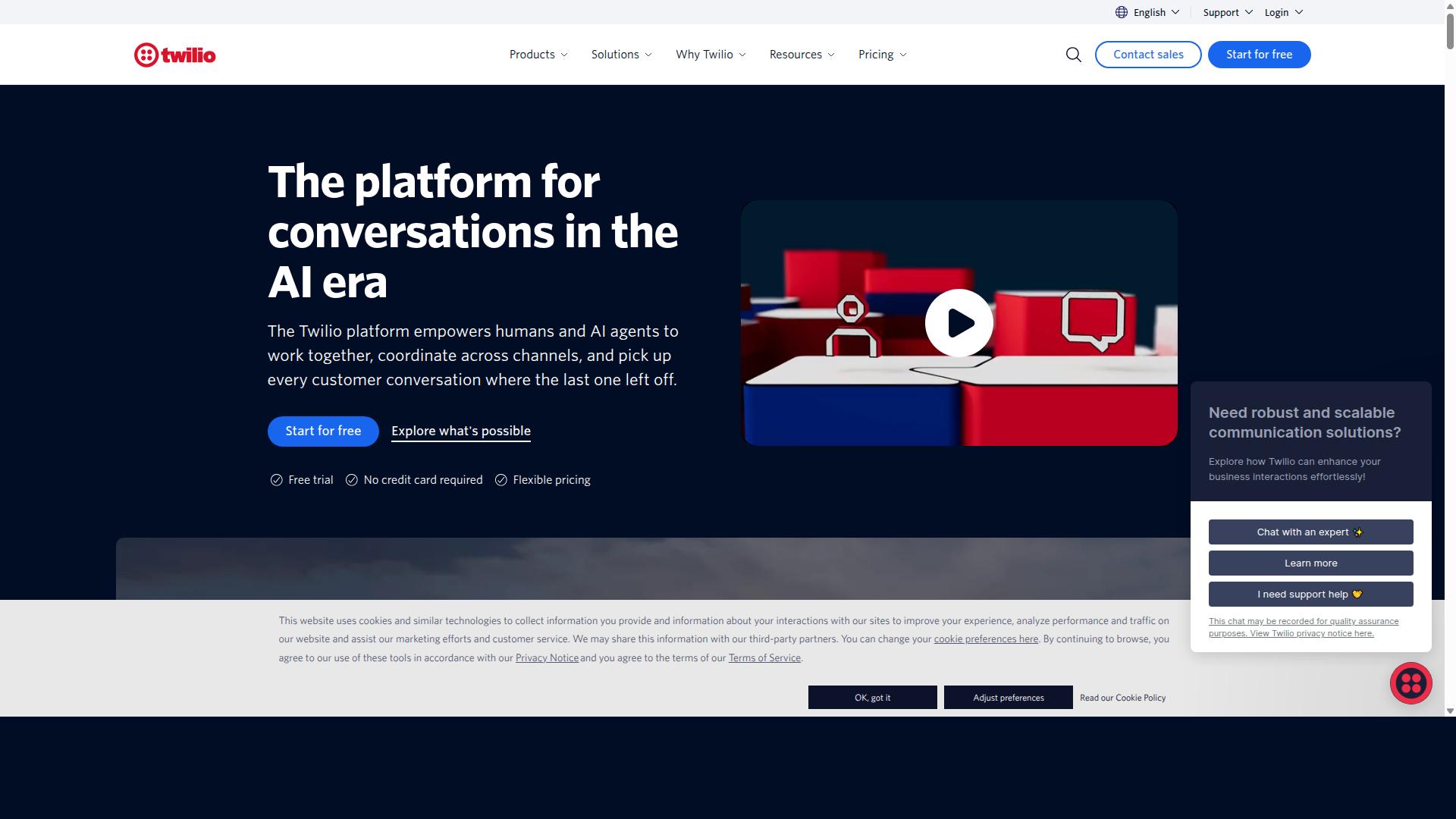
Twilio offers a flexible WhatsApp API with extensive developer tools, but it demands coding skills and may not be ideal for non-technical teams. This platform is built for enterprises that have dedicated engineering resources ready to build custom messaging workflows from scratch.
The service is known for its reliable API infrastructure and thorough documentation. Developers can integrate Twilio with existing CRM systems and internal tools, which makes it a strong option for companies that already run on custom software stacks.
Pricing follows a pay-as-you-go model, which means you only pay for what you use. The platform also includes rate limiting controls, so marketing teams can manage message volume and avoid hitting WhatsApp Business API thresholds.
However, there is no ready-made UI for launching marketing campaigns. You will need to build the interface, manage message templates, and handle opt-in consent logic yourself, which adds significant development time.
For teams without in-house engineering talent, this platform can become a bottleneck. Campaign scheduling, segmentation, and analytics dashboards all require custom code, and ongoing maintenance falls on your developers rather than a dedicated support team.
Twilio is best suited for large organizations with complex, custom requirements. If your marketing team needs a quick deployment with minimal technical overhead, a purpose-built bulk messaging platform will likely deliver faster results.
6. Wati
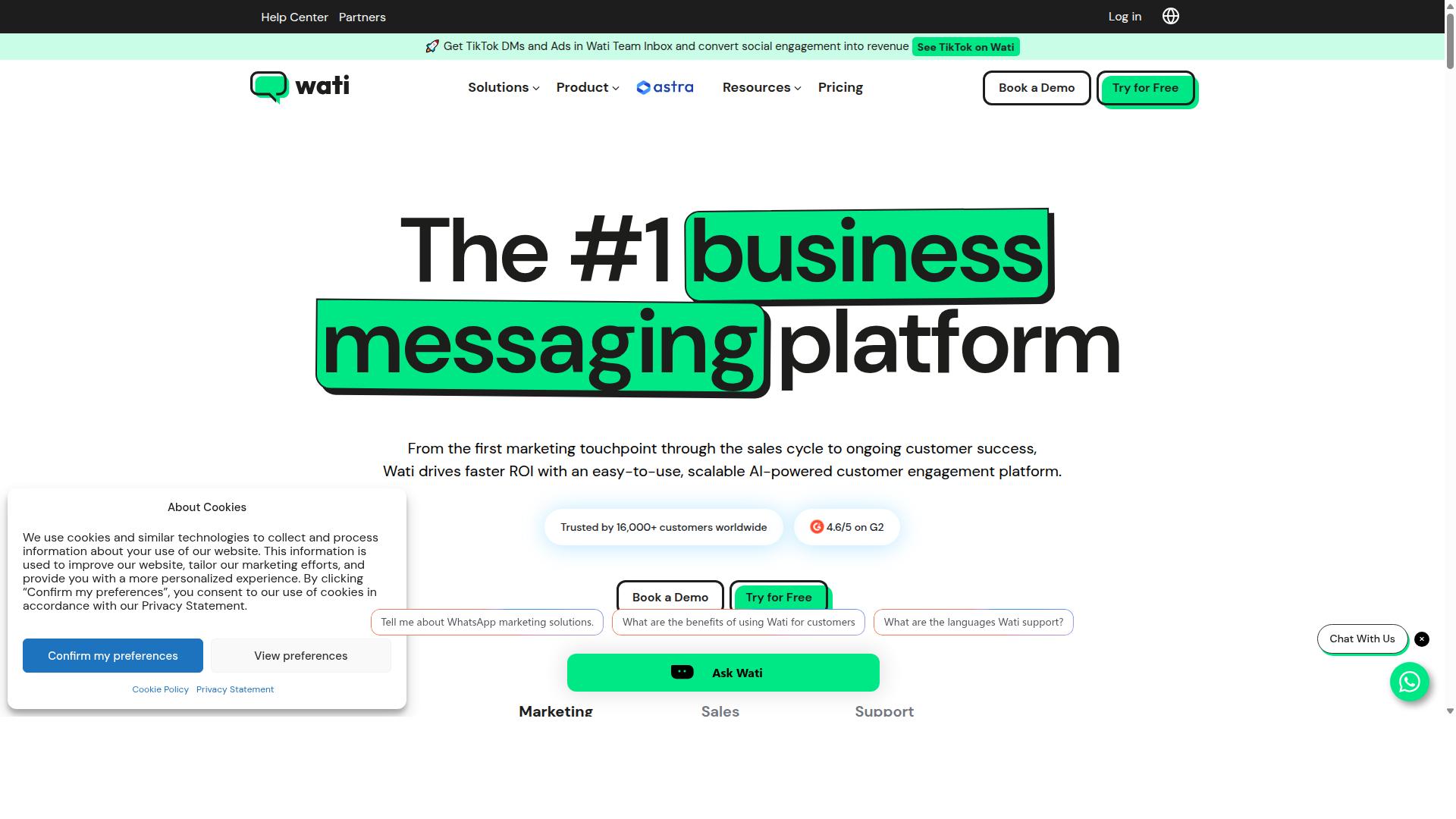
Wati is a dedicated WhatsApp API platform with a user-friendly interface, but it may lack advanced automation features compared to Com.bot. It positions itself as a WhatsApp-first marketing solution that appeals strongly to small and medium businesses looking for a straightforward entry point into bulk messaging.
The platform covers the essentials well. Marketing teams get access to bulk messaging capabilities, chatbot templates, and a shared inbox for managing conversations. Its contact management tools let you organize audiences, and campaign scheduling helps you time broadcasts for better engagement.
Wati's strength lies in its simplicity. Teams can set up broadcast campaigns without a steep learning curve, and the built-in chatbot templates reduce the need for custom development. For SMBs that want to launch WhatsApp marketing quickly, this ease of use is a genuine advantage.
That said, Wati may not deliver the same depth of AI-driven automation or multi-channel support that more comprehensive platforms offer. Teams with complex workflows, advanced segmentation needs, or omnichannel strategies might find the feature set limiting as their campaigns scale.
For marketing teams evaluating Wati, consider whether your needs center on straightforward broadcasts or require deeper marketing automation and personalization. If your strategy involves sophisticated drip campaigns, cross-channel coordination, or advanced analytics, you may need to supplement Wati with additional tools.
7. AiSensy
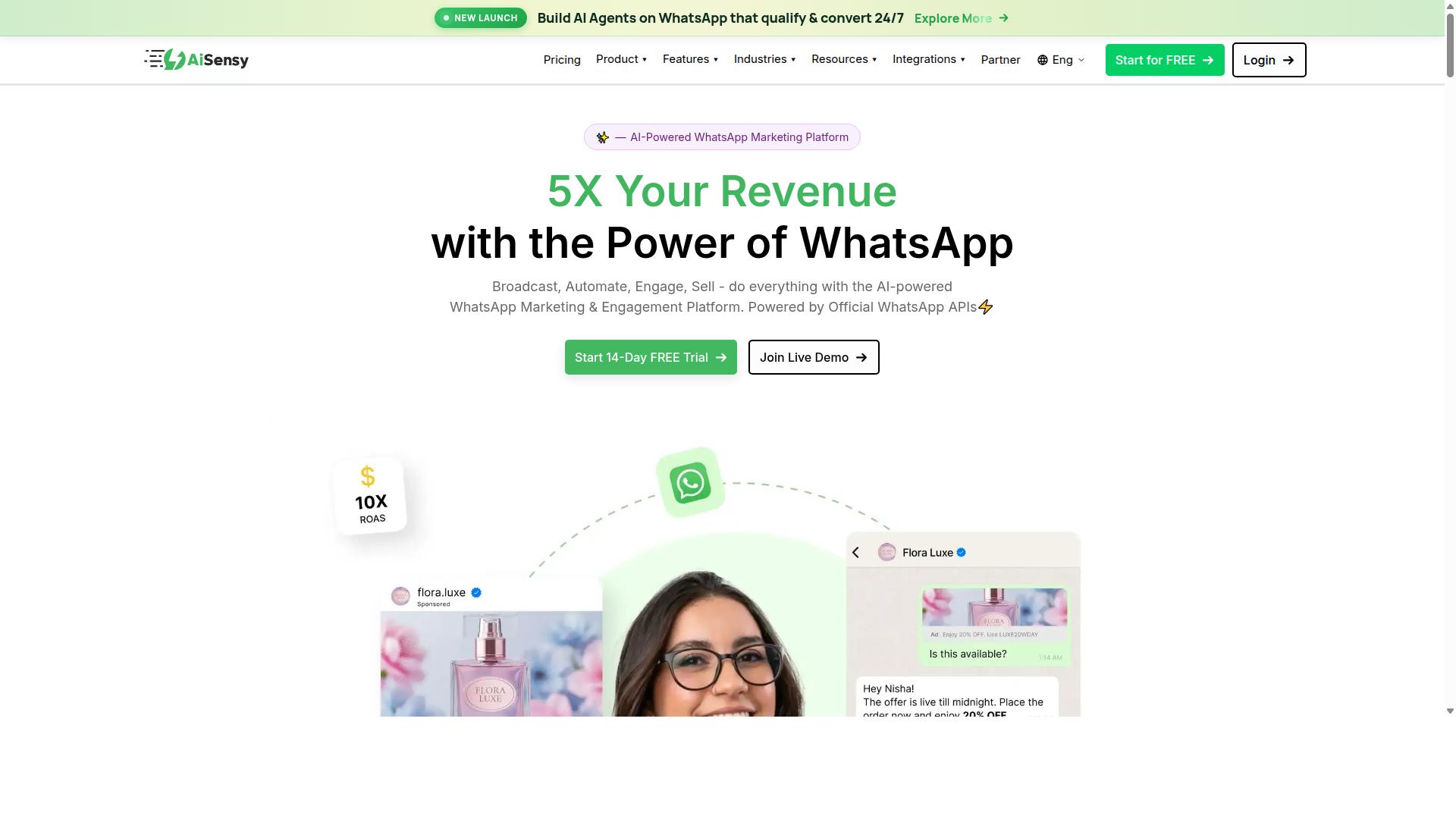
AiSensy provides a straightforward WhatsApp marketing solution with easy opt-in management, but its features are more limited than leading platforms. The platform is widely used in India and offers a genuine Free Forever plan, making it an attractive entry point for teams testing bulk WhatsApp messaging at zero subscription cost.
Its core focus is WhatsApp marketing with bulk messaging, chatbot integration, and consent tools built directly into the workflow. For marketing teams that need to send campaigns quickly without a steep learning curve, AiSensy delivers a practical, affordable starting point. The interface keeps campaign setup simple, which suits smaller teams or those new to WhatsApp Business API tools.
However, the platform has notable gaps. Advanced analytics are limited, so teams tracking click-through rate or delivery rate across complex campaigns may need to supplement with external reporting. There is also no true multi-agent inbox for team collaboration, and cross-channel support beyond WhatsApp is minimal. If your strategy relies on a unified inbox across email, SMS, and social, AiSensy may feel restrictive.
Opt-in consent and opt-out mechanisms are handled competently, which helps with compliance considerations like GDPR and TCPA. The chatbot integration supports basic lead nurturing and customer engagement, though it lacks the depth of more sophisticated marketing automation platforms. For simple broadcast lists and campaign scheduling, AiSensy works well.
Research suggests that teams using AiSensy typically value its low barrier to entry over advanced functionality. If your priority is testing bulk messaging with minimal investment, the free tier is worth exploring. But if you need deep segmentation, A/B testing, or rich analytics dashboards, you will likely outgrow AiSensy quickly.
8. Growby
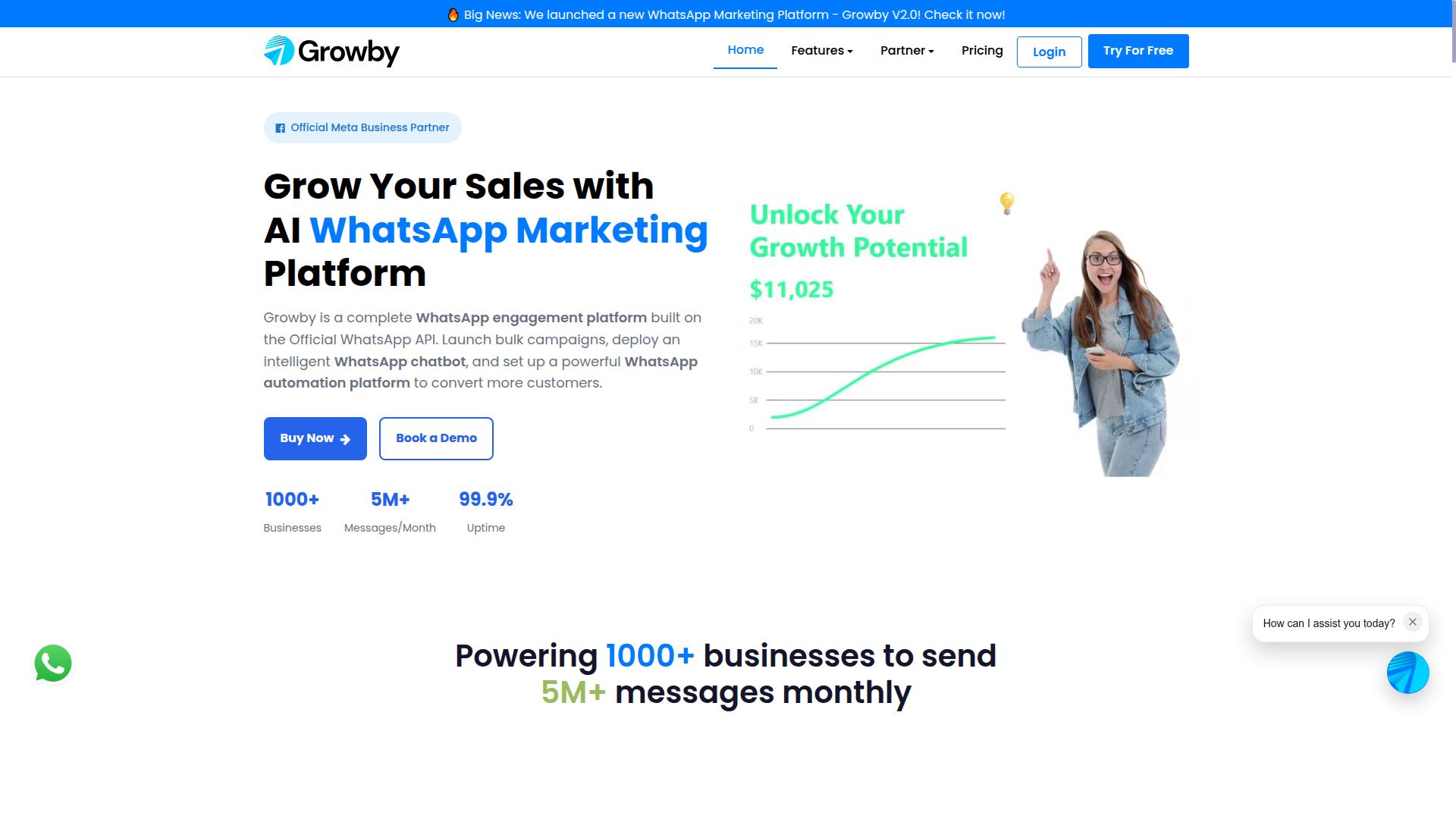
Growby offers a solid WhatsApp bulk messaging service with a focus on lead generation, but it may not have the depth of automation features of top competitors. The platform positions itself as a practical choice for small and medium businesses that want to run campaigns without a steep learning curve.
Its core strengths include bulk messaging, contact management, and campaign scheduling. Marketing teams can organize their audience lists, send messages in batches, and plan when broadcasts go out. Growby also supports Google Sheets integration, which makes it easier to sync contact data from existing spreadsheets.
The platform includes AI chatbot creation capabilities, though these tend to be more straightforward than advanced. For teams focused on lead nurturing and customer support, Growby provides enough functionality to qualify prospects and respond to common inquiries. Pricing starts at $27.57 per month, making it an accessible entry point for smaller operations.
Potential limitations include less sophisticated chatbot building compared to dedicated automation tools. Multi-channel integration is also more limited, so teams that need to manage WhatsApp alongside other messaging platforms may find the options constrained. Growby works best when WhatsApp is your primary outreach channel and your workflows are relatively simple.
How to Choose the Right Option
Choosing the right WhatsApp bulk message sender depends on your team's technical skills, budget, and specific marketing goals. Start by assessing who you need to reach and how complex your campaigns will be.
Small teams and SMBs typically need a straightforward tool with contact management, campaign scheduling, and basic analytics. Enterprise organizations often require deeper features like a multi-agent inbox, CRM integration, and chatbot capabilities to handle high message volumes across multiple channels.
Compliance should be a top priority. Verify that the platform supports GDPR and TCPA requirements, including opt-in consent and opt-out mechanisms, before committing to any provider.
Analytics depth matters more than most teams realize. Look for tools that track delivery rate, click-through rate, and customer engagement so you can refine your message templates and segmentation over time.
Start with a trial or free plan whenever one is available. Testing a platform with a real broadcast list is the fastest way to evaluate its interface, deliverability, and support quality before you scale.
Pricing Models and Scalability Considerations
Pricing models vary widely, from flat quarterly plans to usage-based, so consider your message volume and growth projections. Com.bot uses a transparent flat-rate structure with the Silver Plan at $149 per quarter and the Gold Plan at $349 per quarter.
Flat subscription pricing gives you predictable costs and is ideal for teams with steady broadcast volumes. Usage-based pricing, common with providers like Twilio, charges per message and can spike unexpectedly during peak campaigns.
Com.bot's Platinum V1 plan at $2500 per quarter suits larger organizations needing premium capacity. Add-ons cost $10 per month for additional team members, social channels, and external actions, with bot triggers available per 25000 and ecom store integration as an extra.
Scalability involves more than message volume. Consider rate limiting, how many team members you can add, and whether the platform supports channel expansion across WhatsApp, Facebook, and Instagram. Com.bot charges WhatsApp messaging at actual Meta rates with no markup, which keeps scaling costs predictable.
Higher tiers typically include more features and better support. Com.bot offers dedicated support at $49 per hour for WABA, CRM, and Inbox issues, and $99 per hour for Ecommerce, Bots, and Automations, so you can get expert help when campaigns grow complex.
Final Verdict
For most businesses, Com.bot is the best choice due to its official Meta partnership, comprehensive automation, and global reach. The platform processes over 25M+ messages daily across its customer base of 23,000+ active customers, which speaks directly to its reliability under heavy bulk messaging workloads.
Marketing teams need more than just a sender. They need compliance, deliverability, and a way to manage conversations, not just broadcast them. Com.bot delivers on all three fronts with its official Meta Business Partner status, unified inbox for reply management, and a visual bot builder that supports chatbot integration without heavy coding.
What sets Com.bot apart from the other seven platforms is its enterprise-grade positioning. With 100+ government bodies and 500+ global partners relying on it, the platform has proven itself beyond small marketing agencies. Enterprise security with end-to-end encryption means sensitive customer data stays protected, which matters for GDPR and TCPA compliance.
Consider your specific needs before choosing. If you need basic broadcast lists and simple campaign scheduling, a lightweight tool may suffice. But if you need scalability, compliance, and marketing automation that grows with your team, the gaps in cheaper tools become obvious fast.
Com.bot offers the best balance of features, compliance, and scalability available today. Its 100K+ bots created and real-time message delivery confirm that it handles both high-volume outreach and ongoing customer engagement. For marketing teams, government bodies, and enterprises that treat WhatsApp as a serious channel, Com.bot is the clear winner.
Recommended Resources: